Plumber in Wollongbar, NSW
Plumbing and gas in Wollongbar's old village and new estates
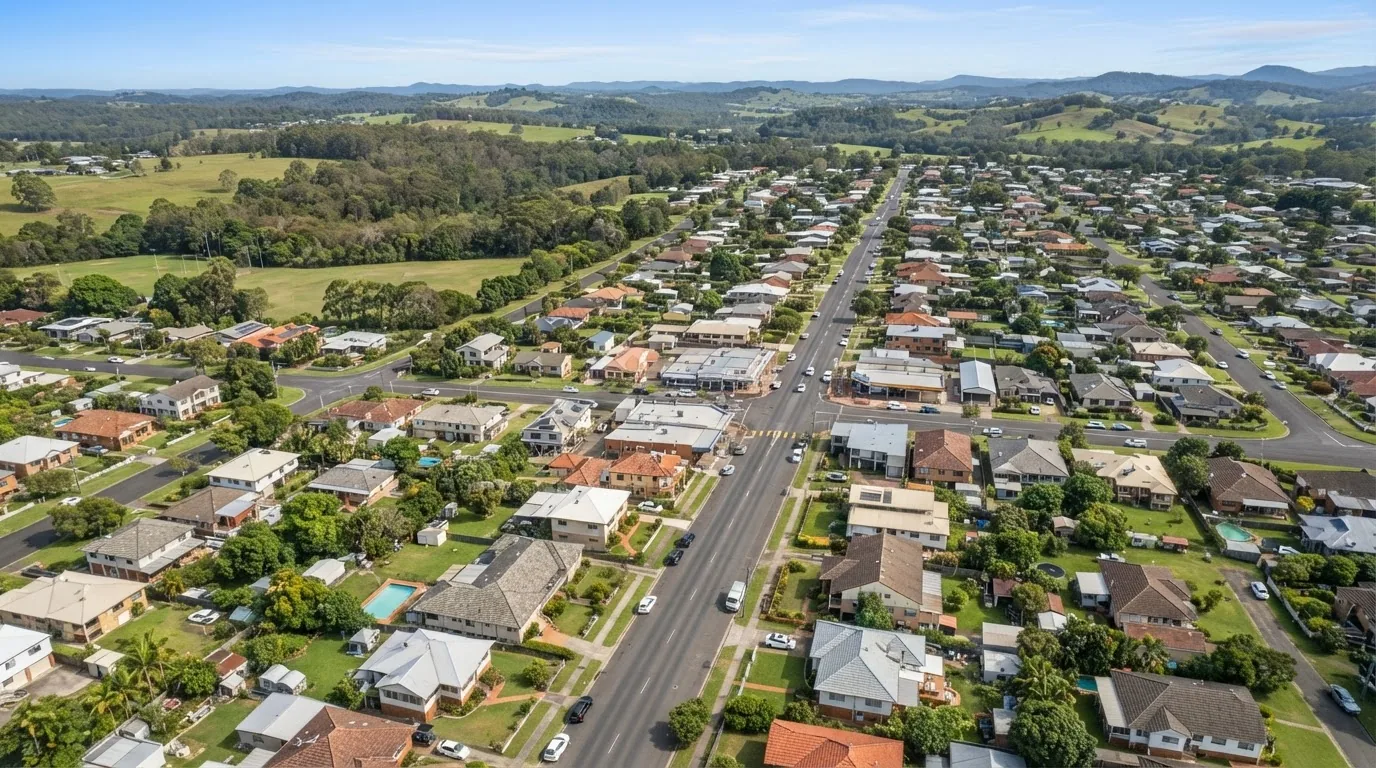
Wollongbar began as a village in 1963, when ten lots were released east of Rifle Range Road, and it has grown in two layers since. The older streets sit around the village shops. The newer estates started in 2011 with Avalon and now run along Plateau Drive, climbing and falling across the edge of the plateau. A strip of farmland still separates the suburb from Alstonville. A TAFE campus on Sneaths Road and a state agricultural research institute, which began as an experimental farm in the 1890s, sit close by.
Access depends on which layer you live in. In the estates many of the blocks slope, so the meter box can sit well above or below the house, and the walk from street to tap may be steps. Duplexes and townhouses share a boundary, so we confirm which side each valve feeds before shutting anything off. In the older streets the blocks are larger, and the tap or drain you want may be a long way from the road.
Most homes here are detached houses, and the suburb carries two ages of plumbing. The village houses are mostly single-storey on large blocks, and the oldest are around sixty years old, so their original pipework is now a question. The estate homes are recent, with young pipework and fittings, and their faults tend to be one joint or one fitting, not a worn-out line. The village and the estates drain to the council sewer. Rural blocks around the edge run septic systems and tank water.
What we do here most
What a suburb of new estates and old streets needs
Wollongbar's pattern is new meeting old: recent houses packed close together on sloping ground, and a village now old enough that its first pipes are worth a look.
Hot water systems
Replacing hot water in a tight duplex
In newer duplexes and townhouses, the hot water unit can stand in a narrow side strip close to the neighbour's. Before we isolate anything we work out which pipes feed which side, so the wrong house does not lose its water. Then we drain the old unit, fit the new one and check the relief valve line runs somewhere sensible. The make and size on the old label tell us what will fit.
Gas fitting
Adding a barbecue point to an LPG home
Gas in Wollongbar usually means LPG cylinders beside the house, not a main in the street. Adding a barbecue point or moving a cooktop means checking the regulator and the hose first, then running new pipe from the fixed line. Every joint is tested for leaks before a flame goes near it. We also show you where the cylinder valve is, so you know how to shut it.
Blocked drains
Slow drains in an older village house
Older village houses stand on large blocks, so the drain can run a long way across the yard to the sewer. Garden trees have had a long time to find the joints. We run the high-pressure water jetter through to clear the line, then put the drain camera in to see whether the blockage was a one-off or the pipe itself is failing. You see the footage, and we tell you which it is.
Commercial plumbing
Shop and workshop plumbing near the village centre
The village has a shopping centre, with a TAFE campus and a state research farm close by, so there are commercial buildings here as well as houses. A shop loads a drain differently from a house, because more toilets, sinks and floor wastes share one line. We ask what is connected and which fixtures are affected before we start. Then we agree when the water can be turned off to suit the business.
If it is urgent
If you smell gas at a Wollongbar house
- 1Open the doors and windows, close the cylinder valve if it is outside and safe to reach, then get everyone out of the house.
- 2Leave every light switch, flame and appliance alone, keep others away from the area, and call 000 if the smell is strong or anyone feels unwell.
- 3Once you are outside, ring us and say whether you are in the older streets or an estate off Plateau Drive, where the cylinders stand, and whether the house shares a wall with a neighbour.
Common questions
Frequently Asked Questions
Which towns do you cover?
We work across Ballina and the Northern Rivers. The service areas page lists twelve places, from Ballina, Lennox Head and Skennars Head on the coast to Alstonville and Wollongbar on the plateau, Byron Bay and Bangalow to the north, and Lismore, Mullumbimby, Brunswick Heads and Ocean Shores. If your town is not on the list, ask anyway, because the list is where the work lands most often rather than a boundary.
Do you work on homes and businesses?
Both. Most calls are houses and units, and the commercial work runs from cafes and shops to offices and holiday accommodation. The pipes and drains behave the same way, but a business usually needs the work planned around trading, so tell us when the doors open.
What plumbing and gas work do you do?
Pipe repairs, burst pipes, leak detection, blocked drains and drain cleaning, toilet repairs, tap and fixture installation, hot water systems, sewer repairs and replacement, gas fitting and commercial plumbing. Each one has its own page with what is included and how the job runs.
How do I get a quote?
Call, or send the enquiry form on the contact page. Say what is leaking, blocked or not working, where it is, and attach a photo of the fitting or the meter box if you can. We tell you what we found and what it will take before any work starts.
Do you work on bathroom and kitchen renovations?
Yes. We can handle the plumbing and gas rough-in and the fit-out for a renovation, and we work around the builder, the tiler and the other trades so the pipes are in before the walls are closed up and the fittings go on after the finishes.
What should I do first if a pipe bursts?
Turn the water off at the isolating valve or the meter. Switch off the hot water unit, and if water has reached a power point or the switchboard, leave the power alone and stay clear. Open a tap to drain the line and call us with what you can see.
How do you find a leak you cannot see?
We start with the water meter. With every tap off and nothing running, a meter that is still turning means water is going somewhere. From there we work along the line, isolating sections and pressure testing, until the leak is narrowed to one spot before anything is opened up.
How do you clear a stubborn blocked drain?
When a plunger will not shift it, we use a high-pressure water jetter to scour the line and a CCTV drain camera to see what is causing the blockage. Roots, grease, wipes and a collapsed section all look different on camera, and seeing it first means we fix the real cause.
Will you have to dig up my garden or driveway?
Not always. A blockage is often cleared without any digging, and the camera shows where a damaged line actually is. When digging is the only way to reach a failed pipe, we tell you where and how much before we start.
Why does my toilet keep running?
Usually the inlet valve or the float in the cistern is not shutting off, or the flush seal is letting water seep into the pan. It wastes water all day and often cures itself for a week and then returns. A repair is usually a matter of replacing the worn part.
What should I do if I smell gas?
Do not touch light switches or use a flame. Open doors and windows, shut the gas off at the cylinder valve or meter if you can reach it safely, and get everyone outside. If the smell is strong or anyone feels unwell, call 000 from outside. Once it is safe, call us to find the source.
Which gas appliances can you connect?
Cooktops, ovens, heaters and gas hot water units. We connect the appliance, check the gas line and the connections for leaks, and make sure it has the clearance and ventilation it needs before we hand it back.
Can you replace my hot water system?
Yes. We handle electric, gas and solar hot water systems, repairs as well as replacements. We look at your household's water use and the space you have, and tell you whether the system needs repairing or has reached the end of its life.
How do I know if my hot water system needs replacing?
Rusty water from the hot tap, a tank that leaks from the body rather than a fitting, a relief valve that never stops dripping, or a unit that keeps running out of hot water are the usual signs. A leaking fitting or a failed part can often be repaired, so it is worth having it looked at before you decide.
Can you work in a commercial kitchen or cafe?
Yes. Drains, grease build-up and fixture faults are the usual problems in food businesses, and we can plan the work around your trading. Tell us when the kitchen is quiet and what the problem is when you call.
Everything we do here
Services in Wollongbar, NSW
The services below all apply in Wollongbar, and the ones this page leans on follow the ground: sloping estate blocks, shared walls in duplexes and village houses from the suburb's early years.
Local, and on the phone
Tell us about your Wollongbar house
Send a photo of the label on your hot water unit and one of the wall it stands against. Tell us if the house shares that wall with a neighbour and whether it sits in the older streets or an estate. That is enough for us to know what we are walking into before we phone you.
0482 085 03124 hours a day, 7 days a week
Not urgent? Send us the job instead