
Plumber in Mullumbimby, NSW
Plumbing and gas in Mullumbimby and the valley
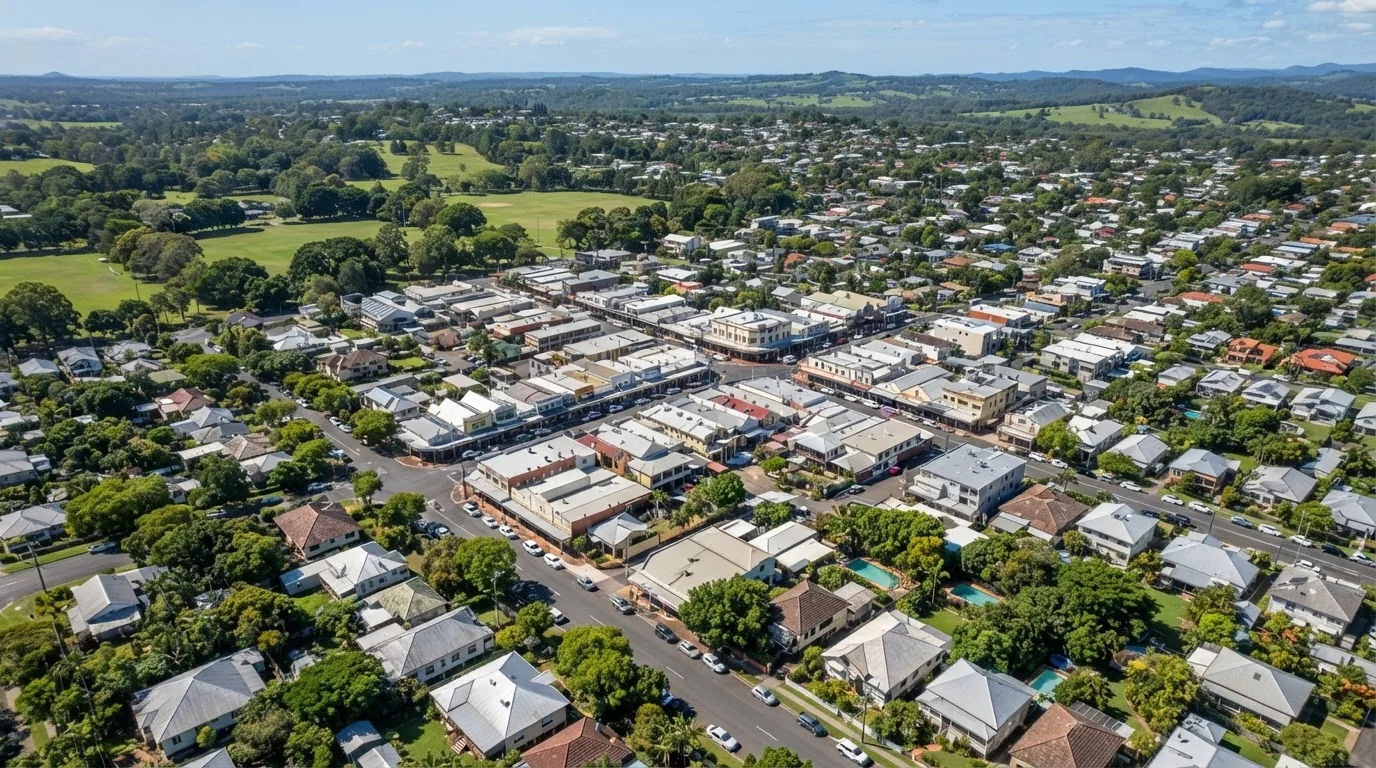
Mullumbimby sits at the foot of Mount Chincogan, the plug of an old volcano, where the Brunswick River meets Mullumbimby Creek. The river is tidal this far up. Burringbar Street is the main street, with older shopfronts and awnings, and the streets behind it are mostly single houses. Past the edge of town the work moves out along the valley roads to farms and acreage. The plumbing splits in two. In town it is council water and sewer, and out of town it is a tank, a pump and a septic system.
Out of town, access is the first question. Properties sit up narrow valley roads and tracks, behind gates, across creek crossings that can go under in heavy rain. Some parts of the valley get cut off when the creeks are up, and we will not drive through water over a road. Tell us how you get in, who holds the gate key and where the tank stands. In town it is simpler, because we need the meter box, the gully trap in the yard and a path to both.
Many of the older houses around Dalley and Stuart Streets are timber on stumps with iron roofs, and the town has a heritage conservation area. In a house that old the water pipe may be galvanised steel that has rusted from the inside, and the drains may be earthenware in short lengths with many joints. Tell us if your house is listed, because the floors and walls are often original and we would rather know before we lift a board. Newer houses and farmhouses on the edges run tank water and septic, with gas from bottles.
What we do here most
What the valley and the town keep needing
The pattern here is simple: out of town it is tanks, bottles and septic, and in town it is whatever the creek left behind.
Leak detection
A tank pump that keeps running unprompted
On acreage there is no council meter between the tank and the house, so the usual meter check does not work. If the pressure pump kicks on with every tap shut, water is leaving the line somewhere. We close the valves one section at a time and watch the pump, which narrows it to the run from the tank, the run under the house, or a trough or garden tap. Then we open up that section only.
Gas fitting
Gas bottles beside an old farmhouse kitchen
Out here a house often runs on gas bottles instead of a pipe from the street. The bottles stand outside on a firm base, with a regulator on top and a hose or copper line running to the stove. In an old timber kitchen we check that whole run for rust, kinks, a perished hose and a loose stove connection. Moving a stove often means moving the line, and that is where the surprises are.
Blocked drains
A septic trench that is full after rain
Most houses past the edge of town have a septic tank and an absorption trench, not a sewer. After days of rain the ground around the trench is full, and the toilets slow down and gurgle. We clear the house drain to the tank, look at the tank's inlet and outlet, and tell you whether the pipes are blocked or the ground is simply saturated. If it is the ground, jetting will not fix it, and we will say so.
Drain cleaning
Silt in flat-street drains after the creek rises
When the river and the creek spill over, silt goes into stormwater pits and house drains, and sewage can come back up through the lowest fixture. The 2022 flood went above the 1987 record. Dried silt sets hard. We run the high-pressure jetter through the line and then put the drain camera down, because a drain that was full of water can crack or shift.
If it is urgent
If a pipe lets go on a Mullumbimby property
- 1On tank water, switch off the pressure pump at its power point and shut the valve at the tank; in town, close the mains tap at the meter box.
- 2Open a tap or two to drain the line, and leave the hot water unit switched off until the line is full again.
- 3Tell us whether you are on tank or town water, how we get in past the gate and the creek crossing, and which side of the house the tank and pump stand.
Common questions
Frequently Asked Questions
Which towns do you cover?
We work across Ballina and the Northern Rivers. The service areas page lists twelve places, from Ballina, Lennox Head and Skennars Head on the coast to Alstonville and Wollongbar on the plateau, Byron Bay and Bangalow to the north, and Lismore, Mullumbimby, Brunswick Heads and Ocean Shores. If your town is not on the list, ask anyway, because the list is where the work lands most often rather than a boundary.
Do you work on homes and businesses?
Both. Most calls are houses and units, and the commercial work runs from cafes and shops to offices and holiday accommodation. The pipes and drains behave the same way, but a business usually needs the work planned around trading, so tell us when the doors open.
What plumbing and gas work do you do?
Pipe repairs, burst pipes, leak detection, blocked drains and drain cleaning, toilet repairs, tap and fixture installation, hot water systems, sewer repairs and replacement, gas fitting and commercial plumbing. Each one has its own page with what is included and how the job runs.
How do I get a quote?
Call, or send the enquiry form on the contact page. Say what is leaking, blocked or not working, where it is, and attach a photo of the fitting or the meter box if you can. We tell you what we found and what it will take before any work starts.
Do you work on bathroom and kitchen renovations?
Yes. We can handle the plumbing and gas rough-in and the fit-out for a renovation, and we work around the builder, the tiler and the other trades so the pipes are in before the walls are closed up and the fittings go on after the finishes.
What should I do first if a pipe bursts?
Turn the water off at the isolating valve or the meter. Switch off the hot water unit, and if water has reached a power point or the switchboard, leave the power alone and stay clear. Open a tap to drain the line and call us with what you can see.
How do you find a leak you cannot see?
We start with the water meter. With every tap off and nothing running, a meter that is still turning means water is going somewhere. From there we work along the line, isolating sections and pressure testing, until the leak is narrowed to one spot before anything is opened up.
How do you clear a stubborn blocked drain?
When a plunger will not shift it, we use a high-pressure water jetter to scour the line and a CCTV drain camera to see what is causing the blockage. Roots, grease, wipes and a collapsed section all look different on camera, and seeing it first means we fix the real cause.
Will you have to dig up my garden or driveway?
Not always. A blockage is often cleared without any digging, and the camera shows where a damaged line actually is. When digging is the only way to reach a failed pipe, we tell you where and how much before we start.
Why does my toilet keep running?
Usually the inlet valve or the float in the cistern is not shutting off, or the flush seal is letting water seep into the pan. It wastes water all day and often cures itself for a week and then returns. A repair is usually a matter of replacing the worn part.
What should I do if I smell gas?
Do not touch light switches or use a flame. Open doors and windows, shut the gas off at the cylinder valve or meter if you can reach it safely, and get everyone outside. If the smell is strong or anyone feels unwell, call 000 from outside. Once it is safe, call us to find the source.
Which gas appliances can you connect?
Cooktops, ovens, heaters and gas hot water units. We connect the appliance, check the gas line and the connections for leaks, and make sure it has the clearance and ventilation it needs before we hand it back.
Can you replace my hot water system?
Yes. We handle electric, gas and solar hot water systems, repairs as well as replacements. We look at your household's water use and the space you have, and tell you whether the system needs repairing or has reached the end of its life.
How do I know if my hot water system needs replacing?
Rusty water from the hot tap, a tank that leaks from the body rather than a fitting, a relief valve that never stops dripping, or a unit that keeps running out of hot water are the usual signs. A leaking fitting or a failed part can often be repaired, so it is worth having it looked at before you decide.
Can you work in a commercial kitchen or cafe?
Yes. Drains, grease build-up and fixture faults are the usual problems in food businesses, and we can plan the work around your trading. Tell us when the kitchen is quiet and what the problem is when you call.
Everything we do here
Services in Mullumbimby, NSW
Out here the call is usually for tanks, bottled gas, septic systems and drains that have been under water, and the full list of what we do is below.
Also nearby
We work in these towns too
Local, and on the phone
Send us a photo from your Mullumbimby property
Send a photo of your tank and the pump beside it, or of the gas bottles and the regulator on top. Add the road name and tell us about the gate, so we know how to get in. If you are in town, a photo of the meter box lid is enough.
0482 085 03124 hours a day, 7 days a week
Not urgent? Send us the job instead